
Power Supply Disruptions in Poultry Houses: Impacts, Risks, and Prevention Solutions
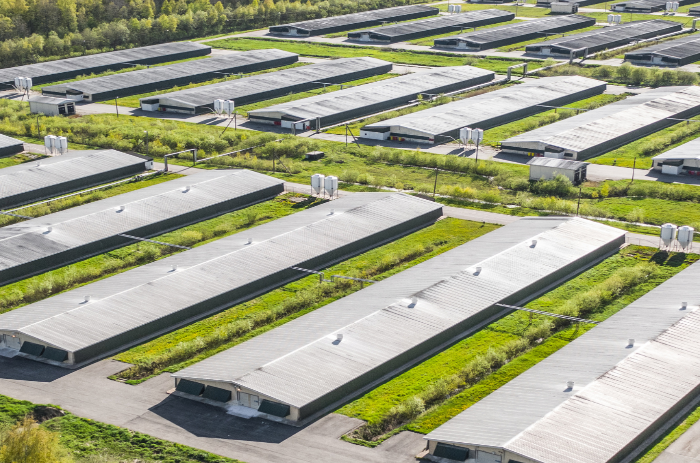
Modern closed-house poultry farms rely heavily on electricity to operate essential systems, including ventilation, temperature control, lighting, and automated feed and water distribution. When a power outage occurs, all these systems stop simultaneously, and within minutes, the risk of stress on the poultry begins to increase.
The immediate impacts of a power outage include:
- Ventilation failure. Blowers and air inlets stop operating, reducing oxygen supply while causing temperatures to rise rapidly. Harmful gases such as ammonia (NH₃) and carbon dioxide (CO₂) also begin to accumulate.
- Cooling system shutdown. Cooling pads and evaporative cooling systems cease functioning, leading to heat stress—one of the primary causes of reduced performance and mortality.
- Loss of lighting. The birds may become frightened and crowd together. During the brooding period (DOC–14 days), this behavior can result in suffocation or mortality.
- Disruption of feed and water distribution. Automated feeding and drinking systems stop operating, increasing stress levels and the risk of dehydration.
If ventilation remains inactive for an extended period, temperatures above 30–32°C can trigger severe heat stress, deteriorate air quality, and increase the risk of respiratory diseases. Several incidents in Indonesia have shown that prolonged power outages have resulted in the loss of thousands of birds, causing financial losses of hundreds of millions of rupiah. These losses are often compounded by reduced harvest weights, poorer feed conversion ratio (FCR), and delayed harvesting schedules.
An Automatic Transfer Switch (ATS), working in conjunction with a generator, helps ensure that power interruptions do not completely disrupt farm operations. When the ATS detects a power outage or unstable utility power, it automatically starts the generator. Once the generator reaches stable voltage and frequency, the ATS transfers the electrical load to the backup power source. When utility power is restored, the ATS automatically switches the load back to the main supply and shuts down the generator. This process reduces downtime to just a few seconds or minutes, allowing ventilation, cooling, lighting, and feeding systems to resume operation as quickly as possible.
As an additional safeguard in the event of generator failure or prolonged power outages, the Curt-O-Matic provides an extra layer of protection by automatically opening the side curtains approximately three minutes after a power failure occurs. This allows fresh air to enter naturally, helping to reduce house temperature, minimize the accumulation of harmful gases, and maintain adequate airflow for the birds until power is restored—all without relying on mechanical ventilation systems.
The highest level of operational resilience is achieved through a three-layer protection strategy: an ATS and generator to provide automatic backup power for critical systems, a Curt-O-Matic to deliver emergency natural ventilation during extended outages, and sound operational management practices, including routine generator inspections, adequate fuel availability, and regular ATS testing.
Reliable ventilation is essential not only for bird welfare but also for the long-term success of poultry operations. Investing in an ATS, generator, and Curt-O-Matic helps maintain farm operations during emergencies, significantly reduces the risk of financial losses, and supports productivity and business sustainability over the long term.
You may also like
Understanding Drinking Systems in Poultry Houses:...
In the poultry industry, feed management and tempe...
Raw Material Quality: A Key Factor Influencing Fee...
Feed quality is one of the key factors affecting p...
Agrinusa at ILDEX Indonesia 2026: Strengthening So...
BSD City, September 2026 — Agrinusa participated i...